

.svg)
Train the Demands, Not the Movement
Your Training Should Match Your Sport
If you play a sport, some of your training should look like it. Not all of it, and probably not the way you'd think.
Most people I meet in the gym are training alongside a sport they're obsessed with. Golf, padel, five-a-side, a race in the calendar. They train two or three times a week, they've been doing it for years, and for sure they're fitter than most people their age.
But ask them what their sport demands of their body, and what in their weekly training answers it, and you get a blank look.
Let me be clear about something: general strength is the foundation, and it stays the foundation. If you're new to training, that's the whole job. Get strong, and your sport will improve without you doing a single sport-specific exercise. Getting stronger and getting better at your sport are two different things, and the first doesn't automatically give you the second. ”Just play more” is a fair comment and it has its place. If you want to get better at padel, play more padel. Skill, decision making, reading the ball off the glass, none of that is coming from a gym, and any strength coach telling you otherwise is overselling what we do.
But there are two things training does that court time can't.
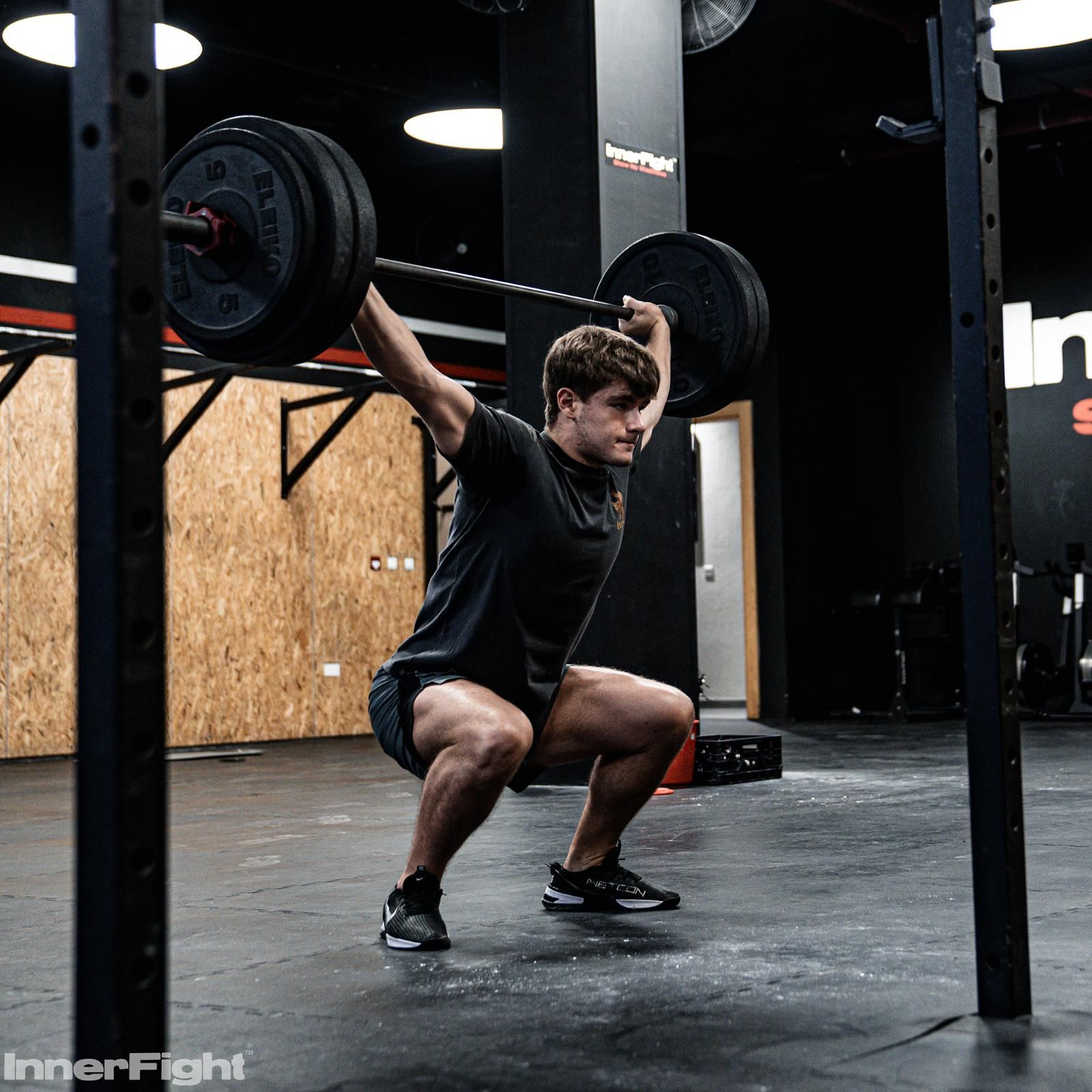
The first is that strength training prepares your tissue for what you're about to put it through, which is what lets you keep playing. And you can only get better at your sport if you're actually on the court doing it.
The second is that it takes away the physical limitations hindering your technique. Take a golfer who can't separate his hips from his shoulders. He physically can't execute the swing his coach keeps describing, no matter how many lessons he pays for. Training doesn't teach him the skill. It takes away the thing making the skill impossible.
Or take that same golfer swinging as hard as he can, every lesson, every range of session, and nobody has ever prepared his body to do that. Eventually something gives, usually his back. Training doesn't hand him clubhead speed. It gives him a body that can produce it over and over without breaking down.
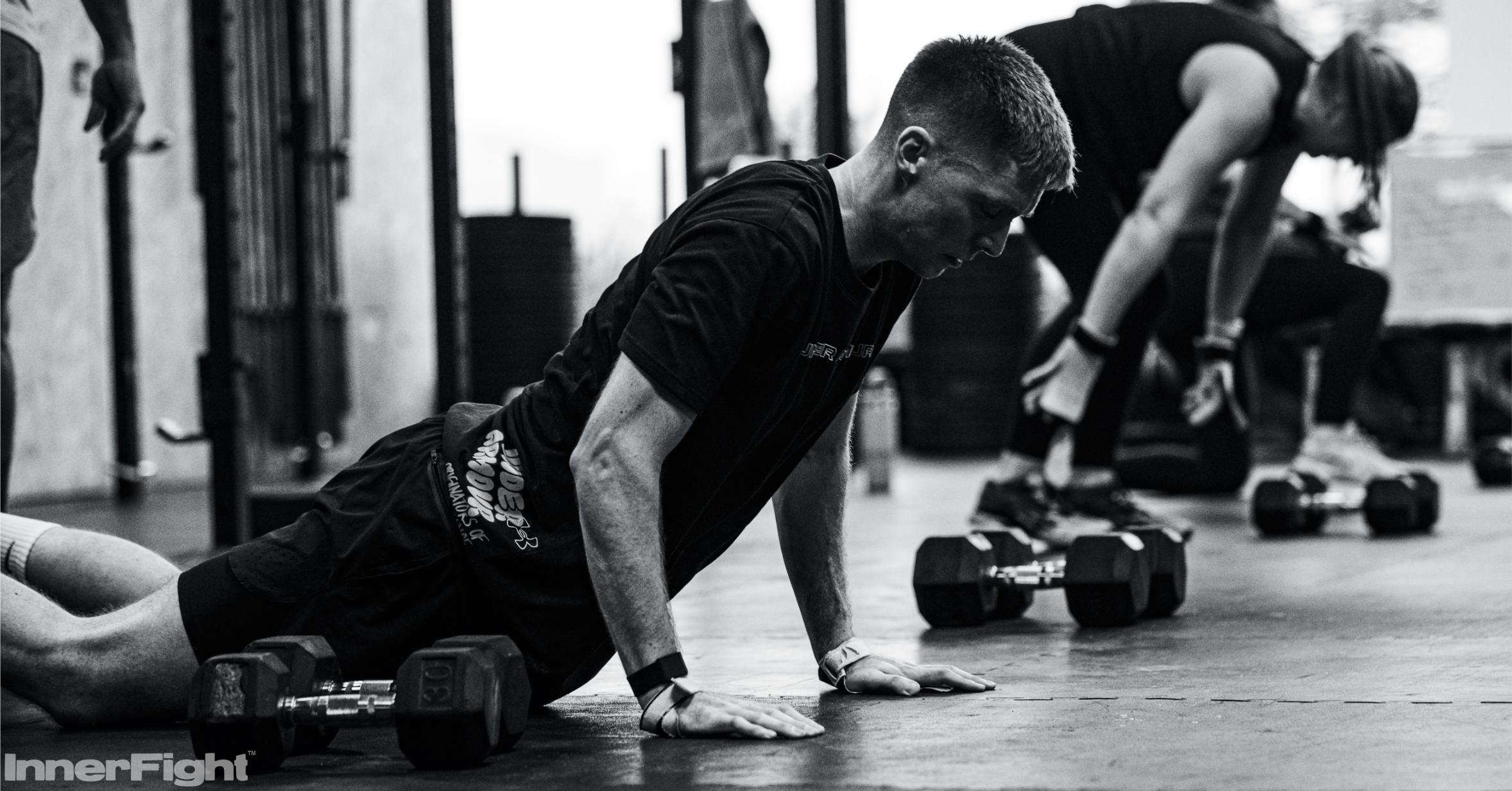
Specific training doesn't mean doing your sport with a dumbbell in your hand.
Here's where I think a lot of people go wrong. Specificity and overload pull against each other. The more exercise looks like your sport, the less you can load it. The more you load it, the less it looks like your sport.
So, copying the movement gives you the worst of both worlds. It's too unlike the sport to be useful practice, and it's too light to be training. A few side steps with a band round the knees isn't specific. It's just your sport, indoors, done badly.
The same goes for the little rehab-style stuff that gets handed out as prevention. Bands, stretches, a few activation drills before you play. That work has its place for sure and is needed in preparing the body, but it isn't training. It doesn'tload anything hard enough to change what your body can tolerate, and tolerance is the whole point. If it isn't heavy enough to be hard, it isn't preparing you for a sport that's hard.
What I'd rather do is look at the demand underneath the movement and overload that instead. Take padel. Hundreds of direction changes an hour, most of them off one leg, with the ankle loaded right at the end of its range. Your sport is asking for that over and over, and the court is the worst possible place to build tolerance for it, because that's the exact moment things break down.
So, you build it somewhere else, somewhere controlled, heavier and slower than the game is ever going to be. Then when that match on a Wednesday night comes around against those work colleagues you desperately want to beat, and the game asks, your body has already got an answer.
Working out which demand to go after, and how much to load it, is a decision someone has to make while watching you move and understanding the demands of your sport.
Nobody can promise you that you won't get injured. But the research shows people who strength train get injured a lot less, and the more they do, the further the risk drops.
You're allowed to chase this
Just because you're not 21 and at the peak of your powers doesn't mean you can't train this way.
One of my favourite quotes comes from Bill Bowerman, the Oregon track coach who cofounded Nike. He said that if you have a body, you're an athlete.
A lot of people in their late 30s and above quietly assume that stopped applying to them somewhere along the way. That training for performance is something professionals do, and what's left for the rest of us is staying in shape.
Being 42 with two kids and a job doesn't take you out of it. It just means the work has to be aimed properly, because you've got less of it to play with.
So have a think about what your sport is actually asking of your body, and whether anything in your weekly training is answering it.
About InnerFight
InnerFight is a premier fitness and endurance coaching company based in Dubai. Whether you’re a busy professional seeking peak performance or an athlete pursuing ambitious dreams, InnerFight offers a supportive community where hard work, honesty, and simplicity drive extraordinary results.
We share insights, advice, tips and success stories to empower your fitness journey:
- The InnerFight Podcast features fitness, mindset, and personal stories
- The Endurance Podcast covers running, cycling, and triathlon training
- The InnerFight Blog delivers expert articles from certified coaches
Follow us on LinkedIn, Instagram, Facebook, and X for weekly motivation, training tips, and behind-the-scenes content from our Dubai community and international training camps.
If you’re based in Dubai, visit our 5,000 square foot facility to experience our world-class strength and conditioning classes, personal training, and endurance coaching. Receive 3 free sessions to experience our approach firsthand.
Fun - Honesty - Simplicity - Smash Life - Mental Toughness - HARD WORK
.avif)


.avif)

.jpg)
.avif)
