Patience Is More Than Waiting

The Difference Between Patience and Waiting
Every athlete says they're willing to be patient in the process. Fewer actually are.
Many people don’t understand what patience is when it comes to many things in life. Most get it wrong and are actually waiting. They end up: sitting through the easy weeks, doing the minimum on the sessions that don't feel like they matter, and holding out for the part of the programme that finally feels ‘hard enough’ to count. It might look like patience from the outside. But it isn't.
Patience is showing up fully for the boring stuff. Whereas waiting is tolerating it until something better comes along.
The difference between the two matters more than most athletes realise, because one of them builds you into a resilient athlete and the other one costs you.
The ‘boring’ sessions…
Nobody gets excited about the easy aerobic run. Nobody's pumped to tick off their mobility work, the strength session with light loads and repeated exercises, or the recovery week/s where the numbers look low, and the energy feels lower.
The thing people don’t understand is that those sessions aren't fillers. They're where the actual profile of an athlete gets built: their physiological base, their movement quality, the small strength imbalances that would otherwise show up later as an injury or a ceiling you can't explain. If you skip that layer, or half do it while waiting for the "real" training to start, you just pay for it later, usually at the worst time in your training block.
Steve Magness, who's coached at the elite level and written extensively on performance and resilience, shares quite often that the boring stuff is your foundation and that you have to let training come rather than force it. It's a simple idea and an unpopular one, because forcing feels like progress and foundational work often doesn't feel like anything at all.
Waiting is being complacent..
This is the part that's harder to admit to yourself: every day you spend waiting is a day you’re not moving closer to the person, athlete or goal you want to become.
An athlete who's waiting has quietly decided that today's session doesn't need their full attention, because the version of them that shows up for the big sessions is the one that counts. That's actually just being complacent, even when it doesn't feel like it. An athlete who waits is one who skips their strength work, cuts out mobility, and hits sessions on autopilot instead of on purpose. None of it looks dramatic in the moment, but all of it adds up over time.
Magness talks about the value of sitting in discomfort rather than reaching for distraction - the idea that practising boredom trains your mind not to chase every shiny thing that shows up. That's exactly what the boring session is asking of you. Not intensity. Attention. And an athlete who's waiting has already decided that attention is optional until the stakes go up.
The problem is that by the time the stakes go up, the gap in your training is already there. You can't build an aerobic base, fix a movement pattern, keep an injury at bay or close a strength imbalance in the three weeks leading up to a race. That works either happened in the sessions you were patient for, or it didn't happen at all.
What patience actually looks like…
Patience isn't passive; it doesn’t just “come” to you. It's about showing up for the boring session with the same intent you'd bring to the one that scares or excites you. It's trusting that the layering of the boring work, week on week, month by month is the plan working its magic, not the plan being “slow”.
I see this most clearly with two types of athletes. Athletes who love chasing the big, scary goal and Postpartum athletes.
The athletes who light up when there’s a huge race on the calendar, a time goal that feels slightly ridiculous, or a challenge that makes them think, “Can I actually do that?”. They thrive on excitement, pushing their limits and having something big to chase. But give them six weeks of easy aerobic running, strength foundations, technique work and controlled progression… and suddenly they’re bored. They want the exciting sessions. They want to feel fast, strong, and powerful. They want to test themselves. They want to feel like they’re training for the big thing and love the dopamine hit that comes with it. But funnily enough the boring work is the work that makes the big thing possible.
The athlete who gets to the start line strongest isn't necessarily the one who trained the hardest. They're the ones who learned to become comfortable with the mundane sessions, prioritised them, and let their fitness build patiently. You can't skip the foundations just because the goal is exciting. Practicing patience builds the athlete capable of achieving more.
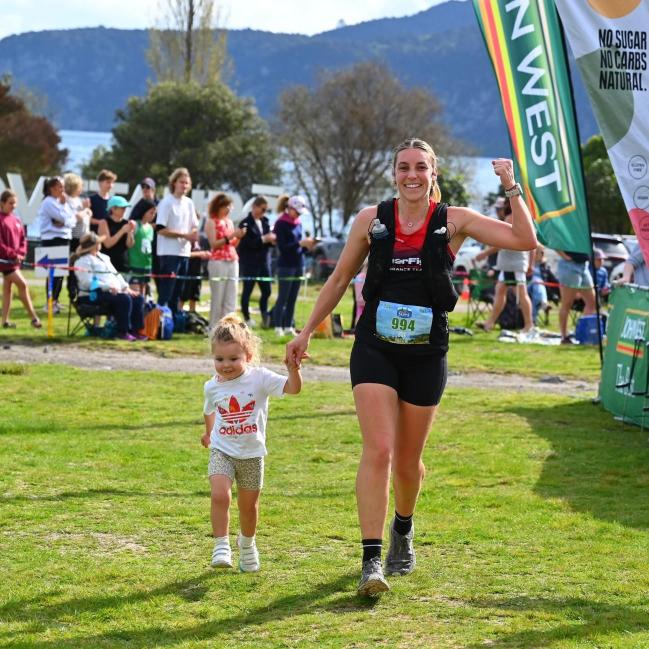
Postpartum athletes returning to exercise can be impatient. They have short windows of time to exercise and are often functioning on sleep deprivation. They’re hunting for that dopamine hit. They have that instinct and desire to chase the fitness that used to come easily, to push past the boring foundational phase to get back to feeling like themselves again. Which is totally fair, I’ve been there personally myself. I can tell you right now that the body doesn't skip steps just because you're impatient with it. The athletes who get back to their best aren't the ones who rushed to the base and thought they could go out and run 5km a few weeks after starting running again. They're the ones who trusted the process, and made peace with the boring slow sessions, until the layers were actually there to build on.
That's the whole difference between patience and waiting. Waiting hopes the gap closes itself with time. Patience does the work that closes it.
How you do anything is how you do everything…
The boring work isn’t getting in the way of the goal. It is the goal. The purpose you hold in the boring sessions decides what happens after that.
If you're waiting for training to start feeling important before you commit to it fully, you're not being patient at all, you're literally limiting what you're capable of, and you’re cheating yourself. Athletes who close the real gaps, physiological and mental, are the ones who have stopped waiting for it to feel worth it and did the work in front of them with the same energy that they would a hard spicy session.
If you can learn to love the boring work, you’ll become dangerous when it gets exciting.
About InnerFight
InnerFight is a premier fitness and endurance coaching company based in Dubai. Whether you’re a busy professional seeking peak performance or an athlete pursuing ambitious dreams, InnerFight offers a supportive community where hard work, honesty, and simplicity drive extraordinary results.
We share insights, advice, tips and success stories to empower your fitness journey:
- The InnerFight Podcast features fitness, mindset, and personal stories
- The Endurance Podcast covers running, cycling, and triathlon training
- The InnerFight Blog delivers expert articles from certified coaches
Follow us on LinkedIn, Instagram, Facebook, and X for weekly motivation, training tips, and behind-the-scenes content from our Dubai community and international training camps.
If you’re based in Dubai, visit our 5,000 square foot facility to experience our world-class strength and conditioning classes, personal training, and endurance coaching. Receive 3 free sessions to experience our approach firsthand.
Fun - Honesty - Simplicity - Smash Life - MENTAL TOUGHNESS - Hard Work